
Small Spaces
And what we do with them.

I recently moved into a studio apartment for the first time. Up until now, I’ve been either a roommate or housemate or fortunate enough to finagle a one-bedroom situation beyond my financial means (this occurred twice, magically, before my luck ran out). A studio is a new experience. I have felt the need to be measured and methodical in how I space things, what goes on the walls.
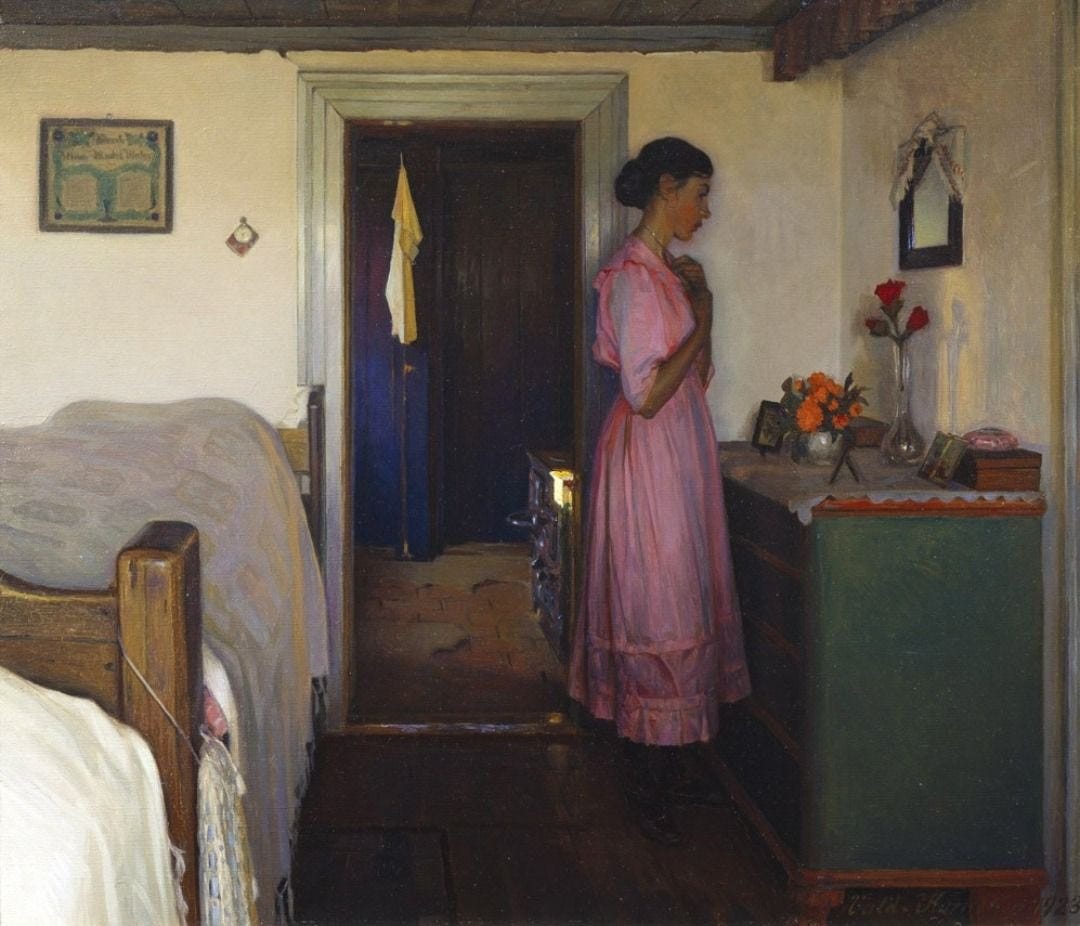
Up until now, I’ve been admittedly loose with decor. Gallery walls with no theme or thesis, rugless living rooms, books everywhere. Books arranged in such ways it’s downright aspirational. (What if a stack of books could be a table? A plant stand? A bearing wall? A concept art piece?) I’ve collected belongings just as a writer collects experiences, shards of conversations, random facts that glint in sunlight—knowing a day might come where these things serve a perfect, unforeseen purpose. But 490 square feet can be terribly unforgiving, so I’ve been newly experimenting with hyper-stringent interior design. Several weeks ago, I went to the Alameda flea market with my mother and aunt and my most discerning eye, looking for furniture (precise dims!) that serves a purpose instead of merely filling a hole. In doing so, I’ve realized this theme is leeching out across other areas of life, and it’s not wholly a bad thing: anything does not go, actually. Not any longer. I turned thirty and here arrived new standards, a set of rules I’m not sure I want to follow, though some deeper instinct is telling me I should.
So really what I’m saying is, this move has got me thinking about small spaces and what we do with them.
*
A move kicks open some door of the psyche that unsettles me. All one’s belongings inventoried, vying for space and relevance. A cross-state move, the second in two years, only hit harder. Denver seemed like a very long time while I was there, a whole life. Plans were made, leases signed, new lifestyles chartered. But since leaving, I can sometimes momentarily convince myself I was never there at all. When that happens, I count the proof, the ways I furnished my time there. Because like this little studio I now inhabit, periods of life are also spaces we fill—be they small or be they large.
In the space of Denver, there were two homes, two bedrooms, two daily routes for dog walks, two frequented cafes to write in, two commutes to the office, a couple semi-memorable relationships. A dozen good, good friends. Two blistering summers, one and a half winters, a single New Year ushered in—wherein, at exactly three minutes past midnight, I suffered a fever so sudden and taxing I had to send myself home wrapped in blankets and sweat it out like a painful, overdue exorcism. I fainted in the morning, in one of the aforementioned coffee shops, bruising my forehead against a cinderblock wall. Two days later I was fine. (As this year has progressed, I’ve become certain this episode was attempting to foreshadow something crucial.)
In the space of Denver, there were also the gelid ski days, the resplendent hikes, mirage-like in their beauty. There were days spent on horseback in the Yampa Valley, dozens of concerts, ski jors, camping in windstorms, birthday benders in a freshly snow-blanketed Vail, walking home from a drag show through a thundering rain. (For such a sunny state, weather looms large in my memory.) But the moments I liked best were banal: The neighborhood kids playing basketball at Curtis Park. Sitting talking on a friend’s couch until three in the morning as a falling snow reimagined the view out her front window. Counting the legion Coors Banquet bottles I’d see littered on my walk to work, how I started treating them like lucky pennies, the Centennial State’s good omen. One perfect afternoon at Cheesman in the early days where the city made no sense to me, when buildings and street signs meant nothing and I moved through the geography untethered by sentimentality, buoyed by hope.
All this, in a small space. And yet still I feel the authority of time coil, then squeeze.
*
When moving, I’m always sickened by the thought of things not fitting. (I don’t actually own that much shit, it’s just called anxiety.) This has happened before, though, resulting in the kind of claustrophobia one feels in one’s throat. And to be candid, a twin fear has been rocking me lately: a fear of not having enough years in which to do the things I’d very, very much like to do and be the person I’d very much like to be. Thirty isn’t old, I know, but it admittedly hit me like a haymaker to the dome. This, I think, is the genesis of my new preoccupation with small spaces. I am searching, sometimes desperately, for an avenue through which I might more successfully negotiate my relationship with time—something that opens its funnel rather than forcing it closed.
I’m very aware of my tendency to try to juice meaning from life immediately. It is frankly the only way I know how to live. It is probably one of the core reasons I write. There is control in shaping a narrative, particularly a painful or confusing one, in the charged window of time where it hurts. For me, writing has always been a way to alchemize pain, to win back a sense of perspective and optimism, and frankly, to demand payment from something or someone who wronged me, or moved me more than I was prepared to be moved. When everything is copy, everything is usable, meaningful. Nothing is wasted—and how beautiful! How stunning a concept. Years ago, when I was twenty-four, I wrote a piece for the now-defunct Bob Cut Mag about moving apartments. I was relocating from a lovably shitty Craigslist rental on Lombard up the hill to a beautiful apartment my cousin owned and sublet to me for a glorious two and a half years. I was ecstatic for the move, yet still found such meaningful pause in the packing up of my life down the hill, the era of debauchery I was leaving behind. I remember cleaning my old bedroom and preternaturally understanding that moves would continue to decimate me, continue to be a very important liminal part of my life, equally as significant as the physical spaces I occupied. You’d think understanding this strange sensitivity would inspire me to avoid the practice altogether, but instead I have doubled down, often choosing to enter and exit spaces rapidly, bracing for the lessons that arrive in their afterburn.
I’ve found that to move—and especially to move alone—is to acknowledge oneself. To inspect your life and make arrangements for it. To move is also to reteach yourself lessons you swore you learned years ago. The lessons get easier in a way, but also impossibly harder because they’re so much deeper. By thirty you’ve surpassed heartbreak 101 or introduction to disillusionment. You’re deep into thesis work, wrestling with monsters that grew as you grew, learned as you learned. Became more human and monster just as you became more human and monster. Nothing is a practice run any longer, if anything ever was. There is resonance to every decision—the decisions that feel right, the decisions that feel off. And there is particular resonance to the decisions that defy either classification: those that simply are. Those whose impact we can only guess at—like we’re living in the space between the sound and the echo, praying what comes back is something we’d like to hear.
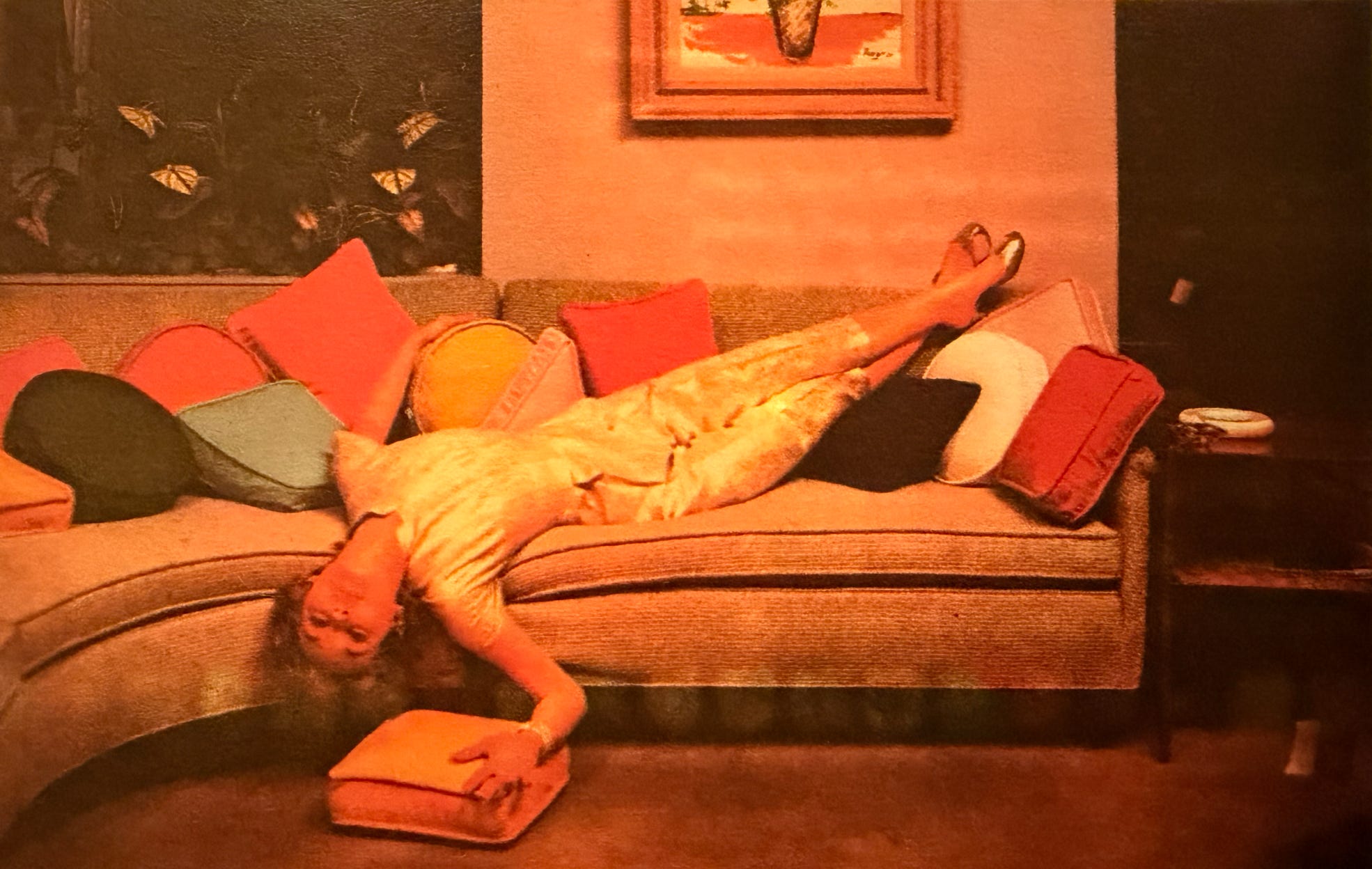
Writing is the best metaphor I have for living. Its surprises and its inevitabilities, its breadth, its many offered paths, its inherent rhyme, and perhaps more than anything, the provocation of the blank page. Writing is, as much as anything else, about space and what we do with it. Writing understands, as life understands, that a moment can be a thousand deliciously drawn-out pages. And a span of years can be a single sentence. Time doesn’t really have authority beyond the literal. And space, seemingly so limitless, can also be such a relative concept. These elements that run our lives are harnessed and domesticated by the act of writing. They bend to our will; they work with us and for us. There is room for everything that needs to happen, to happen. Time and space only mean what we make them mean. And sometimes—what justice in this—they don’t mean anything at all. If writing gives us this, as I have seen it do so many times, then I suppose I need to trust that the time and space we are allotted in life afford us this same possibility.
I have felt a psychological, perhaps spiritual claustrophobia for months now. Ironically, what has started to free me from it has been the study of small spaces, and a meditation on the broken, beautiful relativity of time itself. If these immutable forces are the Fates’ favorite weapon against us, then the antidote appears to be the stories we tell each other—and tell ourselves—within those confines, about those confines. As someone who has moved plenty, I’ve noticed something kind of poetic: an empty space often looks small. Until you fill it.
*
The little studio I now live in is surrounded by life. Dogs bark, motel lights blink out the bay windows, the headlands catch and cradle the sunset each night before a terrific gloaming turns the whole place blue. The fog horn blares, sirens sound, garbage trucks rattle in the chilled morning, and the scent of two dozen restaurants leech through by way of the bathroom window. The bones are good. The lighting is right. And miraculously, everything fits. Everything important fits, somehow. The other day, friends came over for dinner. I watched the place expand to hold us all.
Beautiful. "like we’re living in the space between the sound and the echo, praying what comes back is something we’d like to hear." So gorgeous.
Love. So glad you're back!